

Michael Haneke
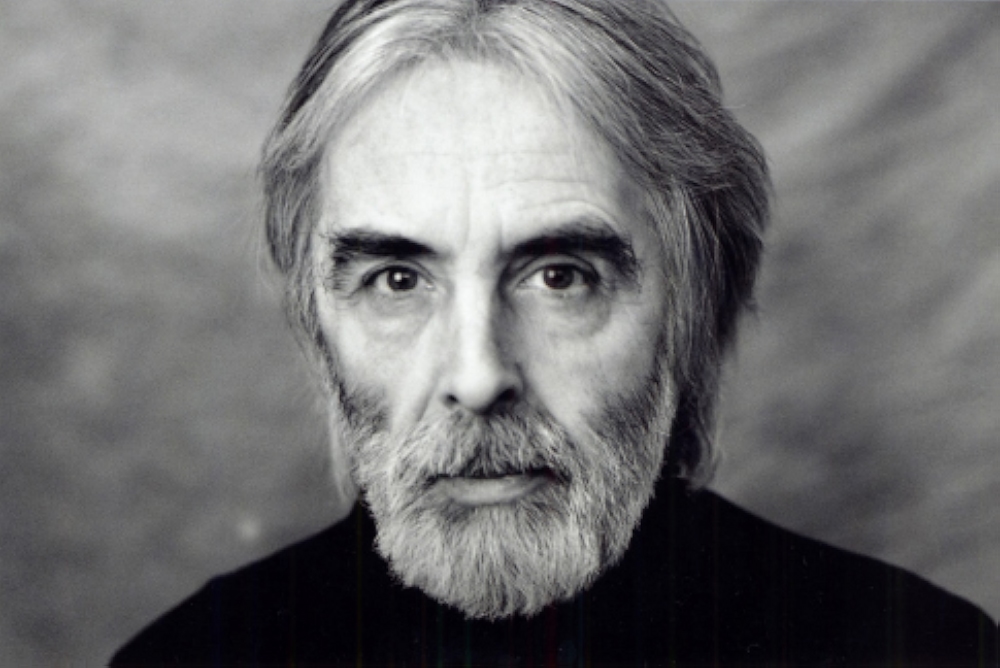
☼ Born on23 janeiro 1942, in Munich, Bavaria, Germany
Biography:
A true master of his craft, Michael Haneke is one of the greatest film artists working today and one who challenges his viewers each year and work goes by, with films that reflect real portions of life in realistic, disturbing and unforgettable ways. One of the most genuine filmmakers of the world cinema, Haneke wrote and directed films in several languages: French, German and English, working with a great variety of actors, such as Juliette Binoche, Isabelle Huppert, Jean-Louis Trintignant, Toby Jones, Ülrich Muhe, Arno Frisch and the list goes on.
This grand figure from Austrian cinema was born in Germany on 23 March 1942, from a German father and an Austrian mother, with both parents being from the artistic world working as actors, a career that Michael also tried but without much suc
(see all)
cess. At the University of Vienna he studied drama, philosophy and psychology, and after graduation he went on to become a film critic and TV editor. His career behind camera started with After Liverpool (1974), which he wrote and directed. He went on to direct five more TV films and two episodes from the miniseries "Lemminge" (1979)_.
The years spent on television works prompted him to finally direct his first cinema feature, during his early 40's, which is somewhat unusual for film directors. But it was worth waiting. In O Sétimo Continente (1989), Haneke establishes the foundation of what his future cinema would be about: a cinema that doesn't provides answers but one that dares to throw more and more questions, a cinema that reflects and analyses the human condition in its darkest and unexpected ways outside of any Hollywood formula. Films that exist to confront audiences and not comfort them. In it, Haneke deals with the duality of social values vs. internal values while exposing an apparent perfect family that runs into physical and material disintegration for reasons unknown. It was the first time a film of his was sent to the Cannes Film Festival (out of competition lineup) but he managed to cause some commotion in the audience with polemic scenes that were meant to extract all possible reactions from the crowd.
His next ventures at the decade's turn was in dealing with disturbed youth and the alienation they have in separating reality from fiction, trying to intersect both to drastic results. In Benny's Video (1992), it's the disturbing story of a teen boy who experiences killing for the first time capturing the murder on tape, impressed by the power of detachment that films and videos can cause to people; and later on the highly controversial Brincadeiras Perigosas (1997), where two teens hold a family hostage to play sadistic games just for their own sick amusement. The film cemented Haneke's name as one of the greatest authors of his generation but sparkled a great debate with its themes of violence, sadism and the influence those things have in audiences. At the 1997's Cannes Film Festival, it was the film that had the most walk-out's by the audience. In between both films, he released 71 Fragmentos de uma Cronologia do Acaso (1994) and Kafka's O Castelo (1997), the latter being one of the rare times when Haneke developed an adapted work.
In the 2000's, he strongly continued in producing more outstanding works prone to debate and reflection in what would become his most prolific decade with the following films: Código Desconhecido (2000), A Pianista (2001), O Tempo do Lobo (2003), Nada a Esconder (2005), an American remake shot-by shot of Brincadeiras Perigosas (2007) and O Laço Branco (2009). His study about romance versus masochism in A Pianista (2001) was an intense work, with powerful performances by Isabelle Huppert and Benoit Magimel, that the Cannes jury in the year were so impressed that Haneke managed to actually reverse their award rules where it was decided that film entries at the festival couldn't win more than one main award (the two lead actors won awards and Haneke got the Grand Prize of the Jury, just lost the Palme d'Or). With O Laço Branco (2009), an enigmatic black-and-white masterpiece following the inception of Nazism in this pre WWI and WWII story focusing on repressed children living in this small village where strange events happen all the time and without any possible reasoning, Haneke conquered the world and audiences with an artistic and daring work that won his first Palme d'Or a Golden Globe as Best Foreign Language Film and received an Oscar nomination for the same category plus the cinematography work of Christian Berger.
2012 was the year that marked his supremacy in the film world with the release of the bold and beautiful Amor (2012), a love story with powerful real drama and one where Haneke removed most of his usual dark characteristics to present more quiet and calm elements without losing input in creating controversy. The touching story of George and Anne provided one the greatest moments of that year and earned Haneke his second and consecutive Palme d'Or at Cannes and his first Oscar nominations for Best Direction and Best Original Screenplay - and it was one of the several nominees for Best Picture Oscar, winning as Best Foreign Language Film.
After abandoning a flash-mob film project, he returned to the screen with Happy End (2017), a film dealing with the refugee crisis in Europe and again he debuted his film at Cannes, receiving mildly positive reviews.
Besides his film work, Haneke also directs theatre productions, from drama to opera, from Così fan tutte to Don Giovanni.
In the role of director
A Professora de Piano (27/07/2026)
Eu nunca tinha assistido “A Professora de Piano” (2001), apesar de estar bem ciente que era um filme que tratava especialmente de traumas maternos e repressão sexual. Nada mais francês, acredito. E o francês é a minha primeira restrição com o filme: eu não sou um grande entusiasta do cinema francês. Não consegui entender, por exemplo, por quê todo mundo fala francês na Áustria — apesar de não me incomodar quando todos os aliens falam inglês nos filmes da Marvel, mas vai entender, né? Dito isso, com toda a fama que o filme carrega, devo confessar que ele tem muito mais aulas de piano do que eu imaginava. A parte sexual é explícita e em alguns momentos incomoda — mas não pelas nudez ou pela gratuidade, que nem a geração de floquinhos mimados reclama hoje em dia; até mesmo porque em nenhum momento nada é gratuito. É pelo trauma mesmo que a coitada da protagonista carrega. Mesmo sendo uma megera de uma professora, e uma pessoa intrinsicamente má, sua persona desagradável transmite uma certa dó. Por vários motivos, o filme não é muito minha praia, mas eu consigo ver nele todos os méritos amplamente gritados pelos fãs da película. Não veria de novo. Mas pra quem nunca viu, a reestréia dele nos cinemas se mostra uma excelente oportunidade de subir um degrau no seu perfil de Letterboxd.