

Paul Thomas Anderson
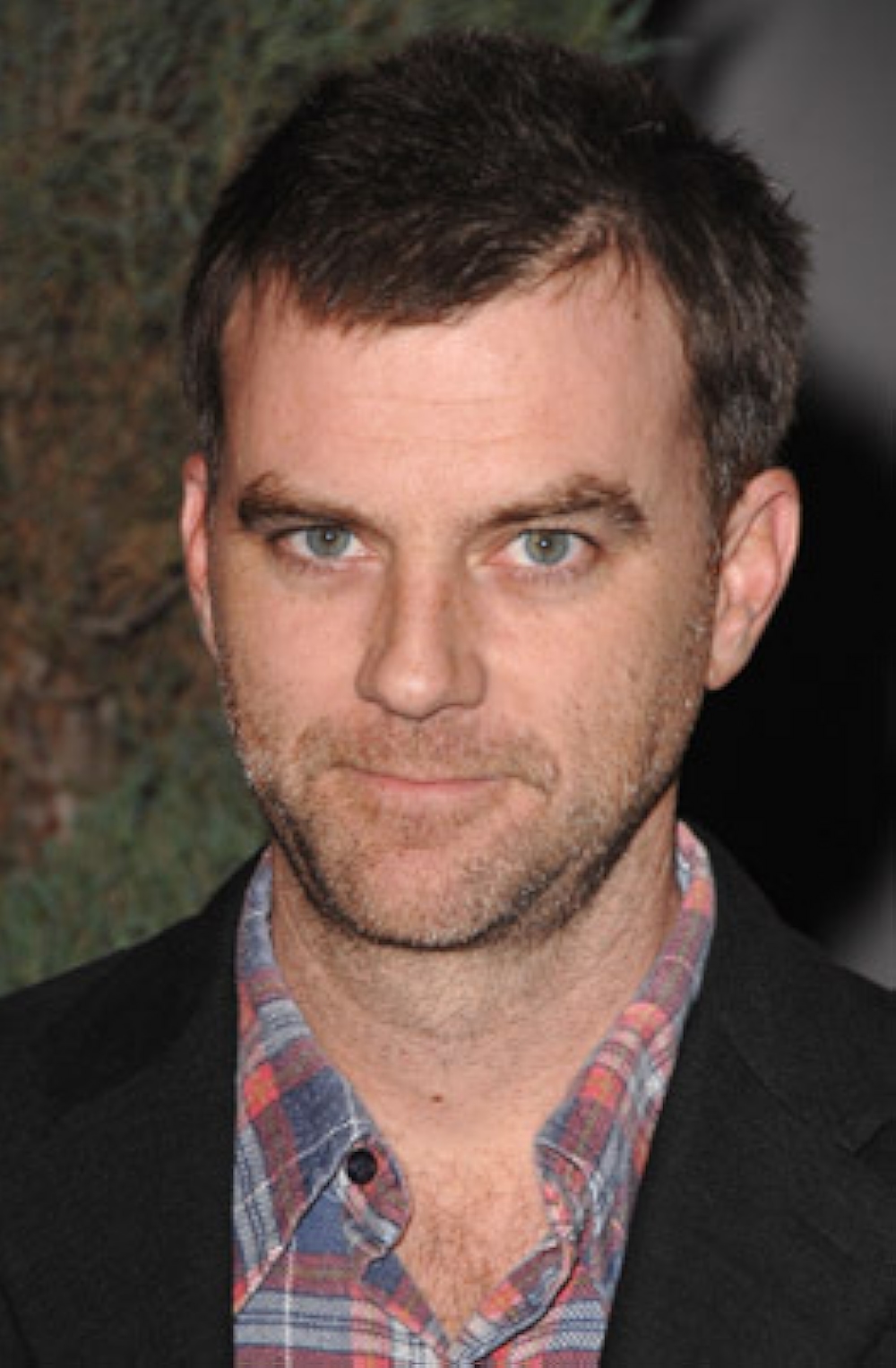
☼ Born on26 janeiro 1970, in Studio City, California, USA
Biography:
Anderson was born in 1970. He was one of the first of the "video store" generation of film-makers. His father was the first man on his block to own a V.C.R., and from a very early age Anderson had a large number of titles available to him. While film-makers like Spielberg cut their teeth making 8 mm films, Anderson cut his teeth shooting films on video and editing them from V.C.R. to V.C.R.
Part of Anderson's artistic D.N.A. comes from his father, who hosted a late night horror show in Cleveland. His father knew a number of oddball celebrities such as Robert Ridgely, an actor who often appeared in Mel Brooks' films and would later play "The Colonel" in Anderson's Jogos de Prazer (1997). Anderson was also very much shaped by growing up in "The Valley", specifically the suburban San Fernando Valle
(see all)
y of greater Los Angeles. The Valley may have been immortalized in the 1980s for its mall-hopping "Valley Girls", but for Anderson it was a slightly seedy part of suburban America. You were close to Hollywood, yet you weren't there. Would-bes and burn-outs populated the area. Anderson's experiences growing up in "The Valley" have no doubt shaped his artistic self, especially since three of his four theatrical features are set in the Valley.
Anderson got into film-making at a young age. His most significant amateur film was The Dirk Diggler Story (1988), a sort of mock-documentary a la This Is Spinal Tap (1984), about a once-great pornography star named Dirk Diggler. After enrolling in N.Y.U.'s film program for two days, Anderson got his tuition back and made his own short film, Cigarettes & Coffee (1993). He also worked as a production assistant on numerous commercials and music videos before he got the chance to make his first feature, something he liked to call Sydney, but would later become known to the public as Passado Sangrento (1996). The film was developed and financed through The Sundance Lab, not unlike Quentin Tarantino's Cães Danados (1992). Anderson cast three actors whom he would continue working with in the future: Altman veteran Philip Baker Hall, the husky and lovable John C. Reilly and, in a small part, Philip Seymour Hoffman, who so far has been featured in all four of Anderson's films. The film deals with a guardian angel type (played by Hall) who takes down-on-his-luck Reilly under his wing. The deliberately paced film featured a number of Anderson trademarks: wonderful use of source light, long takes and top-notch acting. Yet the film was reedited (and retitled) by Rysher Entertainment against Anderson's wishes. It was admired by critics, but didn't catch on at the box office. Still, it was enough for Anderson to eventually get his next movie financed. "Boogie Nights" was, in a sense, a remake of "The Dirk Diggler Story", but Anderson threw away the satirical approach and instead painted a broad canvas about a makeshift family of pornographers. The film was often joyous in its look at the 1970s and the days when pornography was still shot on film, still shown in theatres, and its actors could at least delude themselves into believing that they were movie stars. Yet "Boogie Nights" did not flinch at the dark side, showing a murder and suicide, literally in one (almost) uninterrupted shot, and also showing the lives of these people deteriorate, while also showing how their lives recovered.
Anderson not only worked with Hall, Reilly and Hoffman again, he also worked with Julianne Moore, Melora Walters, William H. Macy and Luis Guzmán. Collectively, Anderson had something that was rare in U.S. cinema: a stock company of top-notch actors. Aside from the above mentioned, Anderson also drew terrific performances from Burt Reynolds and Mark Wahlberg, two actors whose careers were not exactly going full-blast at the time of "Boogie Nights", but who found themselves to be that much more employable afterwards.
The success of "Boogie Nights" gave Anderson the chance to really go for broke in Magnolia (1999), a massive mosaic that could dwarf Altman's Nashville (1975) in its number of characters.
Anderson was awarded a "Best Director" award at Cannes for Embriagado de Amor (2002).
In the role of producer
Uma batalha após a outra (25/09/2025)
Uma coisa que não se pode dizer do cineasta Paul Thomas Anderson é que ele fica na sua zona de conforto. Eu já estou acostumado a entrar na sala de cinema sem saber direito o que eu vou encontrar. Pode ser um drama puxado, que vai te acompanhar pra sempre, tipo o excelente Sangue Negro, ou pode ser um romancezinho cômico e adorável, protagonizado por crianças empresárias, como no excelente Licorice Pizza. Pode ser que eu não entenda nada porque eu sou burro, tipo Inherit Vice ou eu não entendo nada porque ele quer que eu não entenda nada até ele me explicar, como em Magnólia. Já ficou claro que ele não segue um padrão cinematográfico: ele vai fazer o que ele quer ou não. O que lhe der na telha. Seu novo filme, Uma Batalha Após a Outra é uma ação diferente de tudo que ele já fez. E é ótima. É também mais uma oportunidade para vermos Leonardo DiCaprio brilha em TODA cena que ele atua, que é basicamente todo o filme. É inaceitável que esse homem tenha um só Oscar na prateleira de sua merecida mansão. Daqui a pouco a estatueta vai completar 25 anos e ele vai ter que jogar ele fora, mas não tem problema porque é bem evidente para mim que até lá ele já vai ter ganho mais umas 10. Leonardo DiCaprio tem tudo para se tornar o Meryl Streep americano. O Anthony Hopkins de calças. Ou vice-versa, não sei, acho que uma crítica do Paul Thomas Anderson tem que ser confusa e superlativa mesmo, já pra deixar o leitor no clima. No fundo, o tema da obra é paternidade. E nesse tema, o filme consegue ser fofo. Essa coisa de revolução, explodir coisa, lutar karatê, truculência policial e Sean Penn com cara de quem acabou de socar a Madonna é só um pretexto pra estreitar uma relação fofa de pai e filha. O pai já ganhava o filme, mas a filha ainda assim corre atrás: não à toa que o nome da atriz é Chase. Uma novata de 25 aninhos bem conservados, mas meio avançados demais para interpretar uma menina de 16 anos. Não é problema para mim, eu assistia Chaves. No papel de Willa, uma personagem tão bad-ass que eu acho que devia ganhar um spin-off próprio, ela manda bem demais. Se dependesse dela, a próxima geração de revolucionários estaria garantida. Ainda bem, porque os revolucionários de hoje em dia são todos uns patetas. Bob Ferguson, o personagem de DiCaprio, sofre correndo atrás de revoluções improvisadas, decorando códigos, aprendendo pronomes, e sendo cancelado por dizer as coisas erradas; logo um cara que lutava para libertar imigrantes, legalizar o aborto e explodia uns deputados. Um revolucionário que luta por causas de verdade, agora provavelmente tendo que interromper seu caminho para colocar um banheiro neutro em um bunker. Maravilhoso. O filme é enorme, com quase 3 horas de duração. Ele não se apressa, não corta caminhos – e, muito pelo contrário, ele alonga caminhos de forma aparentemente desnecessária. A gente só não percebe porque está vendo personagens divertidos interpretados com maestria em uma película que surge como um “clássico PTA”. O que, no currículo do cineasta, é quase todo filme, e pode significar qualquer coisa.