

Leonardo DiCaprio
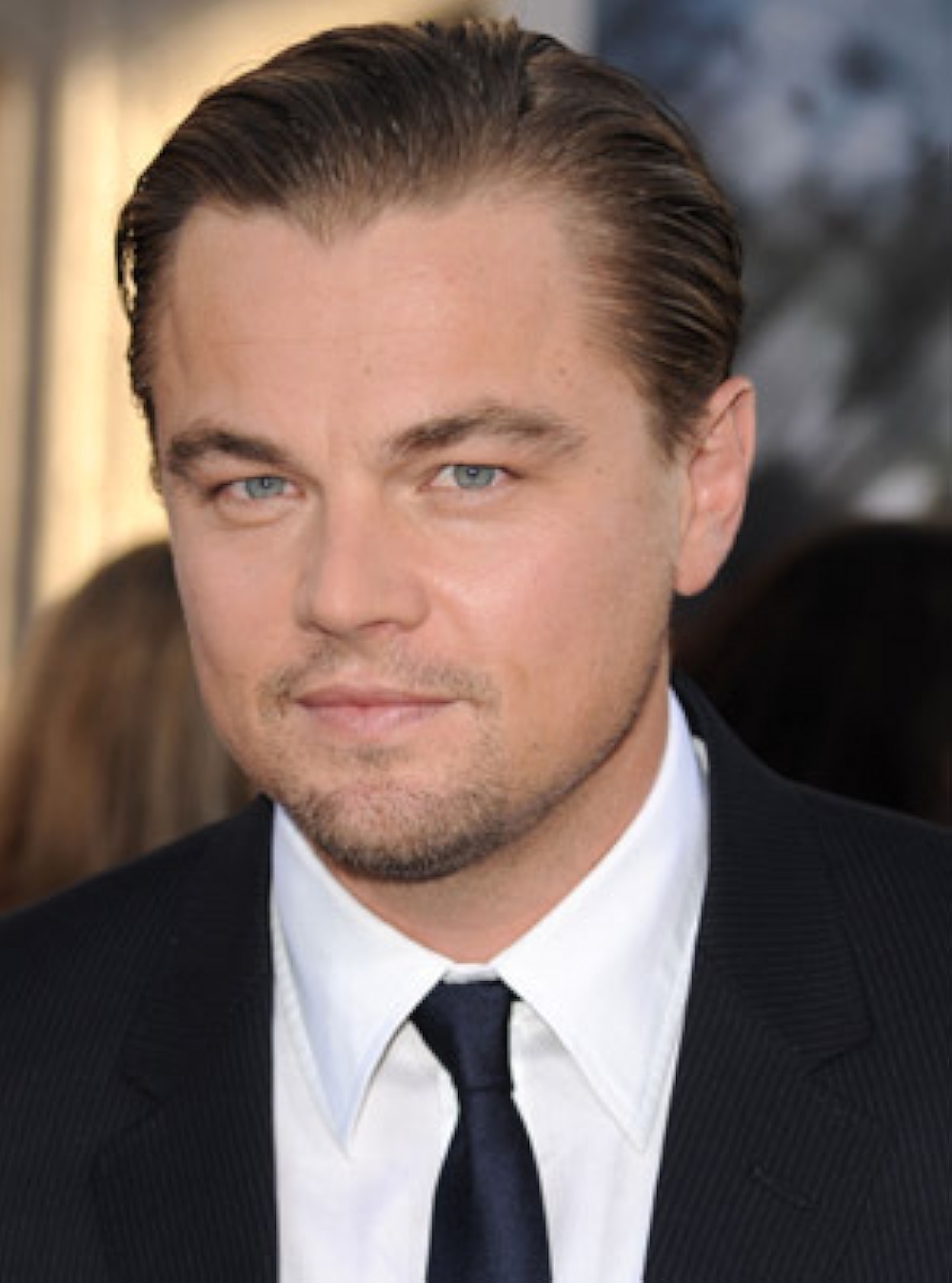
☼ Born on11 janeiro 1974, in Hollywood, Los Angeles, California, USA
Biography:
Few actors in the world have had a career quite as diverse as Leonardo DiCaprio's. DiCaprio has gone from relatively humble beginnings, as a supporting cast member of the sitcom Grandes Tormentos (1985) and low budget horror movies, such as Critters - Seres do Espaço 3 (1991), to a major teenage heartthrob in the 1990s, as the hunky lead actor in movies such as Romeu + Julieta (1996) and Titanic (1997), to then become a leading man in Hollywood blockbusters, made by internationally renowned directors such as Martin Scorsese and Christopher Nolan.
Leonardo Wilhelm DiCaprio was born in Los Angeles, California, the only child of Irmelin DiCaprio (née Indenbirken) and former comic book artist George DiCaprio. His father is of Italian and German descent, and his mother, who is German-born, is
(see all)
of German, Ukrainian and Russian ancestry. His middle name, "Wilhelm", was his maternal grandfather's first name. Leonardo's father had achieved minor status as an artist and distributor of cult comic book titles, and was even depicted in several issues of American Splendor, the cult semi-autobiographical comic book series by the late 'Harvey Pekar', a friend of George's. Leonardo's performance skills became obvious to his parents early on, and after signing him up with a talent agent who wanted Leonardo to perform under the stage name "Lenny Williams", DiCaprio began appearing on a number of television commercials and educational programs.
DiCaprio began attracting the attention of producers, who cast him in small roles in a number of television series, such as Roseanne (1988) and Lassie (1989), but it wasn't until 1991 that DiCaprio made his film debut in Critters - Seres do Espaço 3 (1991), a low-budget horror movie. While Critters - Seres do Espaço 3 (1991) did little to help showcase DiCaprio's acting abilities, it did help him develop his show-reel, and attract the attention of the people behind the hit sitcom Grandes Tormentos (1985), in which Leonardo was cast in the "Cousin Oliver" role of a young homeless boy who moves in with the Seavers. While DiCaprio's stint on Grandes Tormentos (1985) was very short, as the sitcom was axed the year after he joined, it helped bring DiCaprio into the public's attention and, after the sitcom ended, DiCaprio began auditioning for roles in which he would get the chance to prove his acting chops.
Leonardo took up a diverse range of roles in the early 1990s, including a mentally challenged youth in Gilbert Grape (1993), a young gunslinger in Rápida e Mortal (1995) and a drug addict in one of his most challenging roles to date, Jim Carroll in Grito de Revolta (1995), a role which the late River Phoenix originally expressed interest in. While these diverse roles helped establish Leonardo's reputation as an actor, it wasn't until his role as Romeo Montague in Baz Luhrmann's Romeu + Julieta (1996) that Leonardo became a household name, a true movie star. The following year, DiCaprio starred in another movie about doomed lovers, Titanic (1997), which went on to beat all box office records held before then, as, at the time, Titanic (1997) became the highest grossing movie of all time, and cemented DiCaprio's reputation as a teen heartthrob. Following his work on Titanic (1997), DiCaprio kept a low profile for a number of years, with roles in O Homem da Máscara de Ferro (1998) and the low-budget A Praia (2000) being some of his few notable roles during this period.
In 2002, he burst back into screens throughout the world with leading roles in Apanha-me Se Puderes (2002) and Gangs de Nova Iorque (2002), his first of many collaborations with director Martin Scorsese. With a current salary of $20 million a movie, DiCaprio is now one of the biggest movie stars in the world. However, he has not limited his professional career to just acting in movies, as DiCaprio is a committed environmentalist, who is actively involved in many environmental causes, and his commitment to this issue led to his involvement in The 11th Hour, a documentary movie about the state of the natural environment. As someone who has gone from small roles in television commercials to one of the most respected actors in the world, DiCaprio has had one of the most diverse careers in cinema. DiCaprio continued to defy conventions about the types of roles he would accept, and with his career now seeing him leading all-star casts in action thrillers such as The Departed - Entre Inimigos (2006), Shutter Island (2010) and Christopher Nolan's A Origem (2010), DiCaprio continues to wow audiences by refusing to conform to any cliché about actors.
In 2012, he played a mustache twirling villain in Django Libertado (2012), and then tragic literary character Jay Gatsby in O Grande Gatsby (2013) and Jordan Belfort in O Lobo de Wall Street (2013).
DiCaprio is passionate about environmental and humanitarian causes, having donated $1,000,000 to earthquake relief efforts in 2010, the same year he contributed $1,000,000 to the Wildlife Conservation Society.
In the role of actor
Uma batalha após a outra (25/09/2025)
Uma coisa que não se pode dizer do cineasta Paul Thomas Anderson é que ele fica na sua zona de conforto. Eu já estou acostumado a entrar na sala de cinema sem saber direito o que eu vou encontrar. Pode ser um drama puxado, que vai te acompanhar pra sempre, tipo o excelente Sangue Negro, ou pode ser um romancezinho cômico e adorável, protagonizado por crianças empresárias, como no excelente Licorice Pizza. Pode ser que eu não entenda nada porque eu sou burro, tipo Inherit Vice ou eu não entendo nada porque ele quer que eu não entenda nada até ele me explicar, como em Magnólia. Já ficou claro que ele não segue um padrão cinematográfico: ele vai fazer o que ele quer ou não. O que lhe der na telha. Seu novo filme, Uma Batalha Após a Outra é uma ação diferente de tudo que ele já fez. E é ótima. É também mais uma oportunidade para vermos Leonardo DiCaprio brilha em TODA cena que ele atua, que é basicamente todo o filme. É inaceitável que esse homem tenha um só Oscar na prateleira de sua merecida mansão. Daqui a pouco a estatueta vai completar 25 anos e ele vai ter que jogar ele fora, mas não tem problema porque é bem evidente para mim que até lá ele já vai ter ganho mais umas 10. Leonardo DiCaprio tem tudo para se tornar o Meryl Streep americano. O Anthony Hopkins de calças. Ou vice-versa, não sei, acho que uma crítica do Paul Thomas Anderson tem que ser confusa e superlativa mesmo, já pra deixar o leitor no clima. No fundo, o tema da obra é paternidade. E nesse tema, o filme consegue ser fofo. Essa coisa de revolução, explodir coisa, lutar karatê, truculência policial e Sean Penn com cara de quem acabou de socar a Madonna é só um pretexto pra estreitar uma relação fofa de pai e filha. O pai já ganhava o filme, mas a filha ainda assim corre atrás: não à toa que o nome da atriz é Chase. Uma novata de 25 aninhos bem conservados, mas meio avançados demais para interpretar uma menina de 16 anos. Não é problema para mim, eu assistia Chaves. No papel de Willa, uma personagem tão bad-ass que eu acho que devia ganhar um spin-off próprio, ela manda bem demais. Se dependesse dela, a próxima geração de revolucionários estaria garantida. Ainda bem, porque os revolucionários de hoje em dia são todos uns patetas. Bob Ferguson, o personagem de DiCaprio, sofre correndo atrás de revoluções improvisadas, decorando códigos, aprendendo pronomes, e sendo cancelado por dizer as coisas erradas; logo um cara que lutava para libertar imigrantes, legalizar o aborto e explodia uns deputados. Um revolucionário que luta por causas de verdade, agora provavelmente tendo que interromper seu caminho para colocar um banheiro neutro em um bunker. Maravilhoso. O filme é enorme, com quase 3 horas de duração. Ele não se apressa, não corta caminhos – e, muito pelo contrário, ele alonga caminhos de forma aparentemente desnecessária. A gente só não percebe porque está vendo personagens divertidos interpretados com maestria em uma película que surge como um “clássico PTA”. O que, no currículo do cineasta, é quase todo filme, e pode significar qualquer coisa.